Main Formaldehyde Synthesis Core Equipment
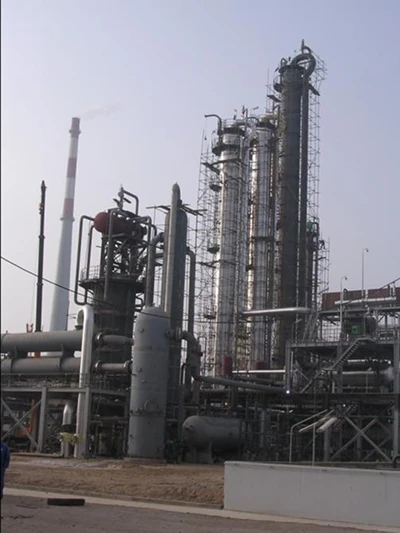
The main core equipment used in formaldehyde synthesis includes reactors, distillation columns, and absorption towers. These systems are designed to optimize the oxidation of methanol to formaldehyde, ensuring high efficiency and yield. The equipment also allows for precise control of temperature, pressure, and reaction time, maintaining consistent product quality. With scalable designs, these units are suitable for both small and large industrial production, meeting the demands of various applications in the chemical and manufacturing industries.
Methanol Evaporator (Evaporation Equipment)
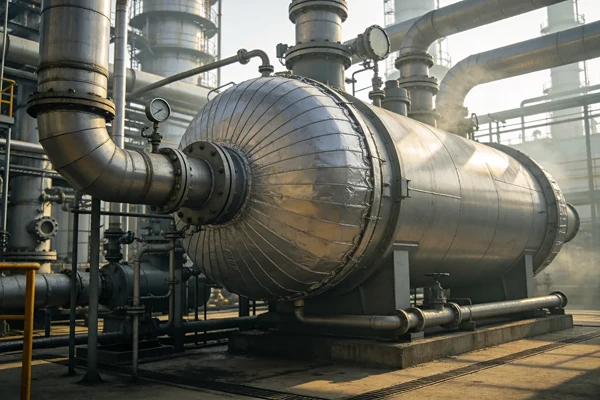
The methanol evaporator is a crucial piece of evaporation equipment in formaldehyde synthesis. It is designed to efficiently vaporize methanol, preparing it for the oxidation reaction. The evaporator operates under controlled temperature and pressure, ensuring that methanol is effectively separated from any remaining impurities before entering the reaction system. By optimizing energy consumption and maximizing heat recovery, the methanol evaporator ensures a high level of operational efficiency. This equipment is scalable, making it suitable for both small-scale and large industrial production processes.
MOC:S30408
Refers to the material of construction for the methanol evaporator, specifically stainless steel grade 304. This material is chosen for its excellent corrosion resistance, high strength, and durability, making it ideal for handling the evaporative process under varying temperatures. S30408 ensures the evaporator’s long-term reliability, preventing degradation and maintaining the integrity of the system during the methanol vaporization process, which is essential for producing high-quality formaldehyde.
Methanol Evaporator Functions
Heats and vaporizes liquid methanol into methanol gas.
Proportionally blends steam and air to form a ternary mixture of methanol, air, and water vapor.
Stabilizes methanol concentration, temperature, and flow rate in preparation for the oxidation reaction.
Methanol Evaporator Advantages
Provides stable evaporation and uniform methanol vaporization for precise reaction ratios.
Equipped with a superheating section to prevent condensation, ensuring a 100% gas phase enters the oxidizer.
Simple structure with high heat transfer efficiency, low energy consumption, and smooth operation.
Designed for easy interlocking control, ensuring safety and reliability for continuous production.
Methanol Oxidizer (Reaction Equipment)
The methanol oxidizer is a key piece of reaction equipment in the formaldehyde synthesis process. It facilitates the oxidation of methanol in the presence of oxygen, converting it into formaldehyde under controlled temperature and pressure conditions. The oxidizer is designed to ensure optimal mixing, uniform distribution of heat, and efficient reaction rates, leading to high yields of formaldehyde with minimal by-products. The equipment’s robust construction and precise control systems make it suitable for both small-scale and large-scale industrial production, ensuring consistent product quality and energy efficiency.
MOC:S321/S304/Q245R
Refers to the materials of construction for the methanol oxidizer, combining stainless steel grades S321 and S304 with carbon steel grade Q245R. S321 and S304 offer excellent resistance to high temperatures and corrosion, ensuring the durability of the oxidizer under harsh reaction conditions. Q245R provides structural strength, making it suitable for handling high-pressure operations. This combination of materials ensures long-term reliability and optimal performance, maintaining the integrity of the system during methanol oxidation for formaldehyde production.
Methanol Oxidizer Functions
Facilitates the oxidative dehydrogenation of methanol over a catalyst.
Controls reaction temperature to ensure high conversion rates and selectivity.
Generates significant byproduct heat, which is recovered and utilized as steam.
Methanol Oxidizer Advantages
High reaction efficiency with methanol conversion rates exceeding 98%.
Uniform catalyst bed temperature ensures excellent formaldehyde selectivity and minimal by-products.
Self-generates steam, significantly reducing the overall energy consumption of the plant.
Fully enclosed, continuous, and highly automated—ideal for large-scale, stable production.
Formaldehyde Absorption Column (Absorption Equipment)
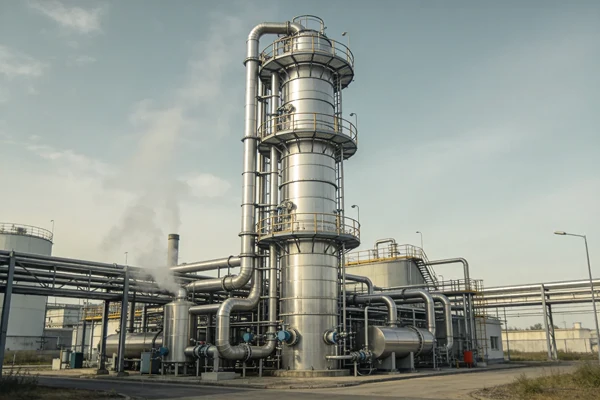
The formaldehyde absorption column is a vital piece of absorption equipment used in the formaldehyde production process. It is designed to absorb excess formaldehyde gas from the reaction mixture, ensuring that only the desired amount of formaldehyde remains in the system. The column operates by passing the gas through a series of absorption stages, where it is selectively absorbed by a liquid absorbent. This process helps purify the product, removing any impurities and minimizing by-products. The column is designed for efficient operation, maintaining high absorption efficiency and ensuring the quality of the final product.
MOC:S30408
Refers to the material of construction for the formaldehyde absorption column, specifically stainless steel grade 316. This material is chosen for its excellent resistance to corrosion, particularly in acidic environments, and its ability to withstand high temperatures. S31603 ensures the long-term durability and performance of the absorption column, even under challenging operating conditions. Its use helps maintain the integrity of the system while ensuring efficient absorption and minimal contamination in the formaldehyde production process.
Formaldehyde Absorption Column Functions
Uses water for counter-current absorption of formaldehyde from the reaction gas to produce an aqueous formaldehyde solution.
Separates inert off-gas (includingN2, CO, H2, etc.).
Regulates formaldehyde concentration (37% to 55%) by controlling absorption temperature and water flow.
Formaldehyde Absorption Column Advantages
Available in packed or plate column designs with absorption efficiency/recovery rates exceeding 99%.
Counter-current operation ensures high concentration with minimal water usage.
Integrated cooling for heat removal prevents formaldehyde polymerization, ensuring product stability.
Off-gas meets emission standards, offering an environmentally friendly, safe, and low-cost operation.
Start Your Chemical Engineering Project
*We respect your confidentiality and all information is protected.