


Main Neopentyl Glycol (NPG) Production Core Equipment
The main core equipment used in neopentyl glycol (NPG) production includes reactors, distillation columns, hydrogenation units, and crystallizers. These systems are designed to ensure efficient chemical reactions, high yield, and consistent product purity. The equipment is built for scalability, optimizing production processes for both small-scale and large industrial operations, while maintaining high-quality standards and minimizing energy consumption. Each piece of equipment plays a critical role in ensuring a reliable, cost-effective manufacturing process for NPG.
Hydroxypivaldehyde (HPA) Reactor (Reaction Equipment)
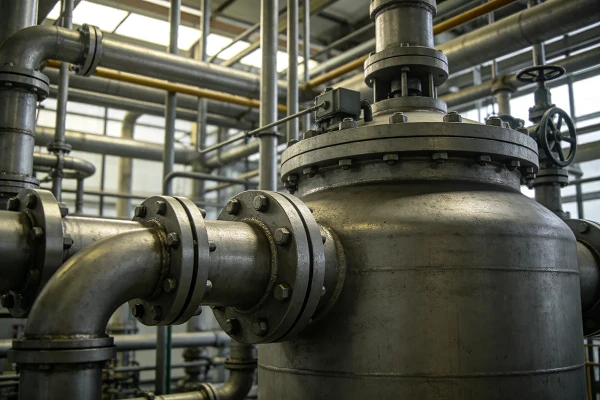
The hydroxypivaldehyde (HPA) reactor is a critical piece of reaction equipment in neopentyl glycol production. It facilitates the reaction between pivaldehyde and hydrogen, under controlled conditions, to form hydroxypivaldehyde, an intermediate in the synthesis process. The reactor is designed for high efficiency, ensuring optimal heat and mass transfer while maintaining precise temperature and pressure control. This helps achieve a high yield of HPA while minimizing by-products. The reactor’s robust design ensures reliable operation for both small-scale and large industrial production.
MOC:S32168
Refers to the material of construction for the hydroxypivaldehyde (HPA) reactor, specifically stainless steel grade 321. This material is selected for its excellent resistance to high temperatures and corrosion, particularly in environments where acids or other reactive compounds are present. S32168 ensures the reactor maintains structural integrity and reliability during the hydrogenation process, supporting efficient and long-lasting operation while safeguarding the purity of the final product.
Hydroxypivaldehyde (HPA) Reactor Functions
Facilitates the aldolization reaction between isobutyraldehyde (IBAL) and formaldehyde, catalyzed by trimethylamine (TMA), to produce hydroxypivaldehyde (HPA).
Reaction Kettle Advantages
Ensures complete reaction conversion and highly uniform mixing of reactants.
Hydrogenation Reactor (Reaction Equipment)
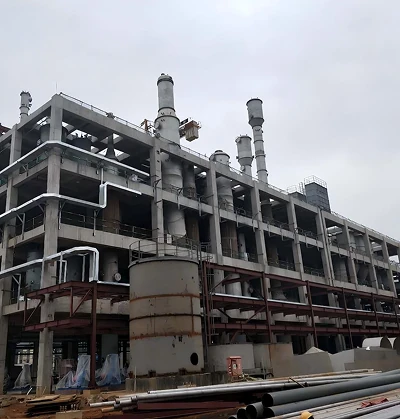
The hydrogenation reactor is a key piece of reaction equipment in the production of neopentyl glycol. It facilitates the addition of hydrogen to intermediate compounds such as hydroxypivaldehyde, under controlled temperature and pressure conditions. The reactor is designed to optimize the hydrogenation process, ensuring high conversion rates and minimal by-product formation. With efficient heat and mass transfer, the reactor ensures consistent product quality and high yield. Its robust design allows for both small-scale and large-scale production, making it ideal for industrial applications.
MOC:S32168+Q345R
Refers to the materials of construction for the hydrogenation reactor, combining stainless steel grade 321 and carbon steel grade Q345R. S32168 offers excellent corrosion resistance, especially under high temperatures, while Q345R ensures structural strength for handling high-pressure conditions. This combination provides durability, reliability, and long-term performance during the hydrogenation process, maintaining the integrity of the reactor and ensuring high-quality production of neopentyl glycol.
Hydrogenation Reactor Functions
The reactor is packed with a copper-based catalyst. Hydrogen and hydroxypivaldehyde (HPA) enter from the top of the reactor in a co-current flow, passing through two reactors in series to synthesize the crude NPG product.
Tubular Reactor Advantages
This process ensures high-quality crude NPG with superior yields.



Start Your Chemical Engineering Project
Start Your Chemical Engineering Project
*We respect your confidentiality and all information is protected.