


Formaldehyde Production Process Package for Chemical Manufacturing
CAS No.: 50-00-0
The Formaldehyde Process Package is designed to efficiently produce formaldehyde, a key chemical used in manufacturing resins, plastics, and textiles. This package provides a complete solution, including optimized reaction conditions, equipment selection, and process integration, ensuring high yield and consistent product quality.


Formaldehyde Production Process Package Typical Usage
Formaldehyde is widely used in resins, adhesives, plastics, coatings, and chemical intermediates, serving as a key raw material for construction, wood processing, and textile industries.
- Used in the production of urea-formaldehyde and phenolic resins for wood adhesives and panels.
- Applied in coatings and paints to enhance durability, hardness, and chemical resistance.
- Serves as a key intermediate for manufacturing plastics, synthetic fibers, and engineering materials.
- Used in textile processing to improve wrinkle resistance and dimensional stability of fabrics.
- Applied in chemical synthesis for producing intermediates such as hexamine and pentaerythritol.
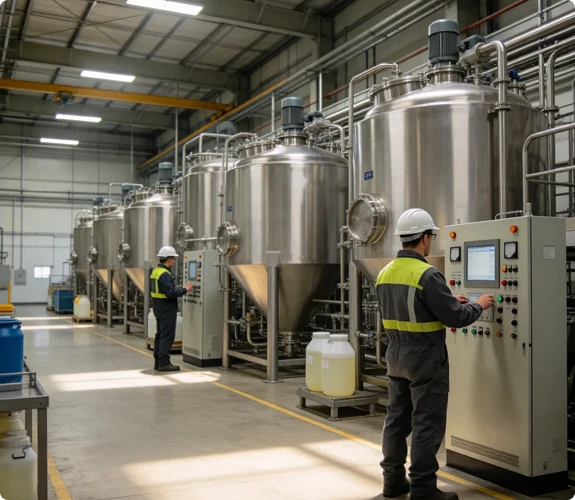
Formaldehyde Production Process
The process uses methanol oxidation over silver catalyst at high temperature to form formaldehyde gas, which is then cooled and absorbed in water to produce formaldehyde solution.
Main Raw Materials for Pentaerythritol Production
Methanol
High-purity methanol is the primary feedstock, undergoing oxidation and dehydrogenation to produce formaldehyde, directly affecting conversion efficiency and product quality.
Air
Air supplies oxygen for the oxidation reaction, and its ratio with methanol must be precisely controlled to maintain optimal temperature, selectivity, and safe operation.
Silver Catalyst
Electrolytic silver catalyst enables high-temperature oxidation and dehydrogenation of methanol, ensuring high activity, stable performance, and efficient formaldehyde formation.
Integrated Reaction Mechanism and Process Engineering
The process integrates oxidation and dehydrogenation reactions over silver catalyst at 630–650℃, forming a thermally balanced system. Precise control of oxygen-methanol ratio and temperature ensures high selectivity, efficient heat recovery, and stable continuous operation.
Formaldehyde Production Process Package Core Advantage
This process offers high conversion efficiency, stable operation, effective heat recovery, and low energy consumption, ensuring reliable production of high-quality formaldehyde.
High Reaction Efficiency
Optimized oxidation and dehydrogenation over silver catalyst ensure high methanol conversion and formaldehyde yield with controlled by-product formation.
Stable Thermal Balance
The reaction system maintains heat balance through controlled oxygen-methanol ratio, enabling stable operation without external heat input.
Efficient Heat Recovery
High-temperature reaction gas is utilized for steam generation, improving overall energy efficiency and reducing operating costs.
Reliable Continuous Operation
Advanced control systems and optimized reactor design enable long-term stable operation with consistent product quality and safe performance.
Formaldehyde Production Process Package Function
The Formaldehyde Production Process Package enables efficient formaldehyde production with integrated reaction, heat recovery, and absorption systems, ensuring stable operation and consistent product quality.
Integrated Reaction and Absorption System
Our process package combines methanol oxidation, heat recovery, and multi-stage absorption into a continuous system, enabling efficient formaldehyde production with stable operation, optimized energy utilization, and consistent product quality.
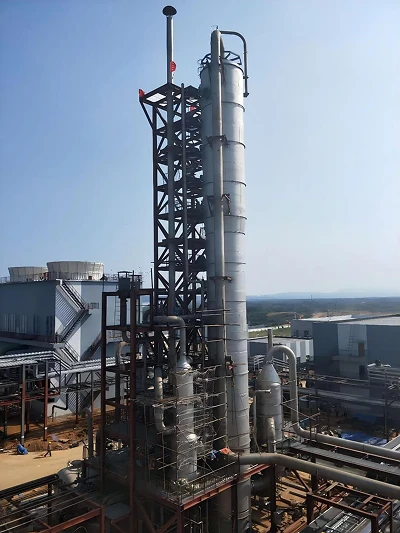
Formaldehyde Production Process Package Process Flow
The process flow includes methanol evaporation, air mixing, catalytic reaction over silver catalyst, heat recovery, and multi-stage absorption to produce formaldehyde solution.
1
Methanol Evaporation
Liquid methanol is vaporized and mixed with filtered air, then heated to form a stable gas mixture with controlled oxygen-methanol ratio for reaction.
2
Methanol Oxidation
The gas mixture enters the reactor and reacts over silver catalyst at high temperature, producing formaldehyde through oxidation and dehydrogenation.
3
Formaldehyde Absorption
Hot formaldehyde gas is cooled and absorbed in multi-stage towers with water to produce formaldehyde solution of required concentration.
4
Tail Gas Treatment
Unabsorbed gases are sent to incineration system for safe treatment, ensuring emission compliance and stable environmental performance.
Formaldehyde Production Process Package FAQ
Q1: What are the key benefits of the Formaldehyde Production Process Package?
The package provides optimized reaction conditions, high yield, energy efficiency, and scalability, ensuring consistent product quality while minimizing operational costs.
Q2: What are the raw materials required for Formaldehyde production?
The primary raw materials are methanol and oxygen, which undergo catalytic oxidation to produce formaldehyde in a controlled reaction process.
Q3: How scalable is the Formaldehyde Production Process Package?
The process is highly scalable, making it suitable for both small-scale operations and large industrial production, offering flexibility for various production needs.
Q4: Which industries benefit from the Formaldehyde Production Process Package?
The package benefits industries such as resins, plastics, textiles, and disinfectants, as formaldehyde is used in manufacturing various chemical products like resins, adhesives, and preservatives.



Start Your Chemical Engineering Project
Start Your Chemical Engineering Project
*We respect your confidentiality and all information is protected.