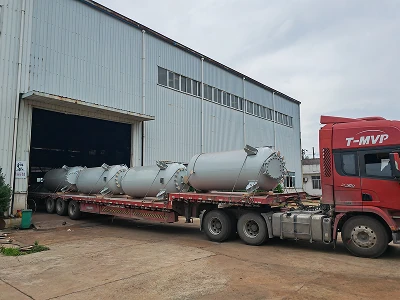
Main Pentaerythritol Synthesis Core Equipment

The main core equipment used in pentaerythritol synthesis includes reactors, distillation columns, crystallizers, and evaporation systems. These units are designed to optimize reaction conditions, improve yield, and ensure high purity, while maintaining efficiency and scalability for large-scale production.


Reaction Kettle (Reaction Equipment)

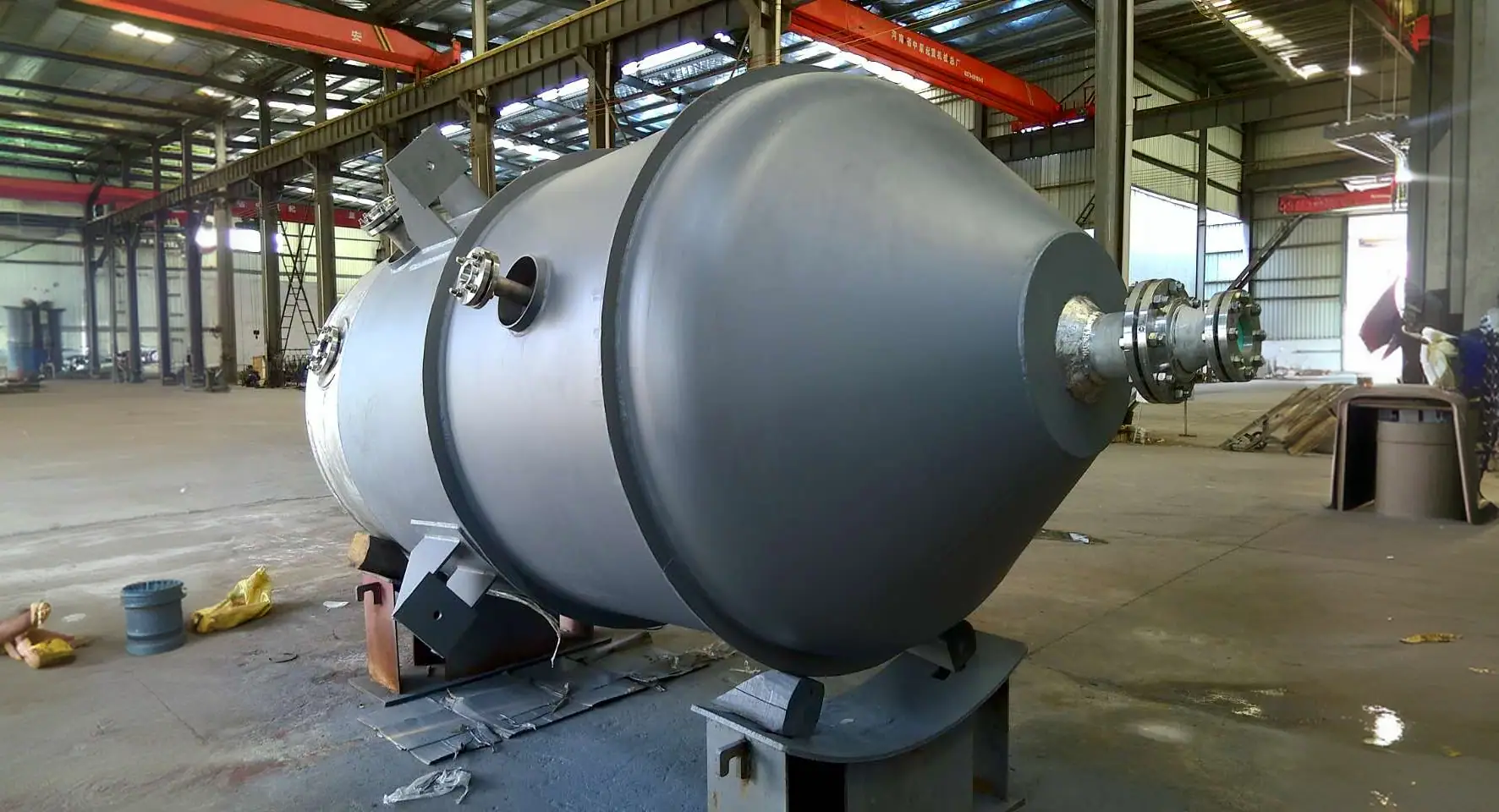
The reaction kettle, a key piece of reaction equipment in pentaerythritol synthesis, is designed to facilitate controlled chemical reactions under specific temperature and pressure conditions. It ensures optimal mixing of reactants such as formaldehyde and acetaldehyde, allowing for efficient conversion. The kettle is built to handle high volumes and maintain consistent reaction rates, contributing to higher yield and product quality while minimizing by-products.

MOC:S30408

Refers to the material of construction used for the reaction kettle, specifically stainless steel grade 304. This material is known for its excellent corrosion resistance, high strength, and durability, making it ideal for handling chemical reactions in pentaerythritol synthesis. S30408 ensures the longevity and reliability of the equipment, even under high temperature and pressure conditions, while maintaining the purity of the reaction process.

reaction-kettle-reaction-equipment-banner

Reaction Kettle Functions

Facilitates aldol condensation of formaldehyde and acetaldehyde under alkaline conditions to produce pentaerythritol intermediates.

Manages complete reaction cycles, temperature control, pH regulation, initial mixing, and conversion.

Reaction Kettle Advantages

Equipped with agitation and jacketed heat exchange for stable temperature control and prevention of undesired side reactions.

Excellent corrosion resistance against alkaline and formaldehyde-rich systems.

Supports both batch and continuous operations; features high conversion rates and flexible handling.

Tubular Reactor (Reaction Equipment)

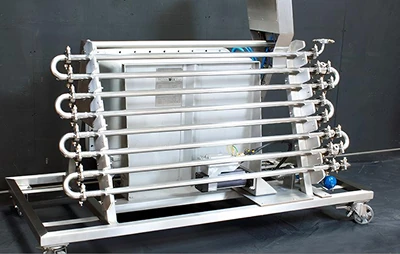
The tubular reactor is engineered for continuous pentaerythritol synthesis, enabling precise control of residence time, temperature, and mixing. Its plug-flow design enhances selectivity, minimizes side reactions, and ensures stable product quality while supporting efficient heat transfer and scalable industrial operation.

MOC:S30408

Refers to the material of construction used for the tubular reactor, specifically stainless steel grade 304. This material is known for its excellent resistance to corrosion and high durability, making it ideal for handling the demanding conditions in pentaerythritol synthesis. S30408 ensures that the reactor maintains structural integrity and performance, even under elevated temperatures and pressures, while safeguarding the purity and quality of the final product.

Tubular Reactor Functions

Enables continuous, rapid, and deep reaction of the condensation liquid to ensure full conversion of intermediates into pentaerythritol.

Provides strong plug flow with uniform residence time and zero back-mixing.

tubular-reactor-reaction-equipment-banner

Tubular Reactor Advantages

High reaction speed and efficiency, ideal for large-scale continuous production.

Precise control over temperature, pressure, and residence time to minimize by-products.

Compact footprint with superior sealing; reduces formaldehyde volatilization for enhanced safety.

Formaldehyde Stripping Column(Rectifying Equipment)

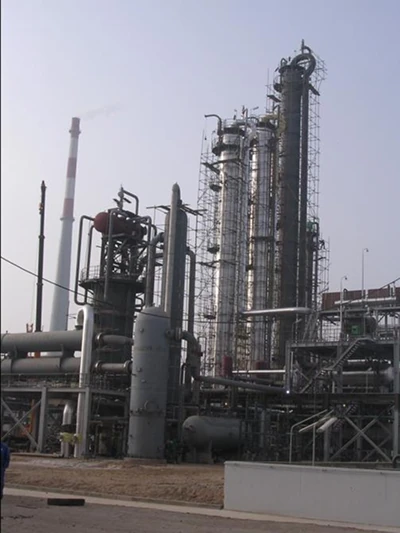
The formaldehyde stripping column is a critical rectifying equipment used in the pentaerythritol synthesis process. It is designed to efficiently separate formaldehyde from other components in the reaction mixture through a process of vaporization and condensation. The column ensures high purity of formaldehyde by removing impurities and by-products, allowing for the recovery of unreacted formaldehyde for reuse in the process. With precise control over temperature and pressure, the stripping column optimizes the efficiency of formaldehyde recovery, contributing to overall process sustainability and reducing material waste.

MOC:S31603

Refers to the material of construction for the formaldehyde stripping column, specifically stainless steel grade 316. Known for its superior resistance to corrosion, especially in high-temperature and acidic environments, S31603 ensures durability and reliability in the stripping column. This material is ideal for handling the reactive and corrosive components in the pentaerythritol synthesis process, ensuring long-term performance and maintaining the purity of the final product.

formaldehyde-stripping-column-rectifying-equipment-banner

Formaldehyde Stripping Column Functions

Removes excess formaldehyde, water, methanol, and other light components via distillation.

Reduces the load on downstream concentration and crystallization stages; prevents formaldehyde contamination of the final product.

Formaldehyde Stripping Column Advantages

Utilizes pressurized rectifying for thorough and clean stripping of formaldehyde.

Recycles top-stream formaldehyde back into production to lower raw material consumption.

Protects downstream evaporators and crystallizers by reducing scaling and corrosion.

Multi-stage Evaporator (Evaporation Equipment)

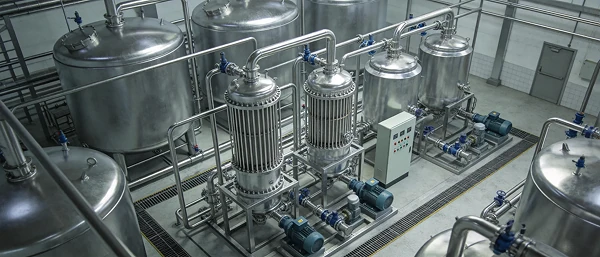
The multi-stage evaporator is an essential evaporation equipment used in the pentaerythritol synthesis process. It operates through multiple stages to efficiently remove solvents and water from the reaction mixture. By using a stepwise evaporation process, the evaporator maximizes heat recovery and minimizes energy consumption, ensuring optimal operation. The multi-stage design allows for precise control over the concentration of the mixture, enhancing the overall yield and purity of pentaerythritol while maintaining energy efficiency and process sustainability.

MOC:S30408

Refers to the material of construction used for the multi-stage evaporator, specifically stainless steel grade 304. This material is chosen for its excellent resistance to corrosion, high strength, and durability, making it ideal for handling the harsh conditions in the evaporation process. S30408 ensures long-term reliability, even under elevated temperatures and pressure, while maintaining the integrity of the evaporator and the quality of the final product.

Multi-stage Evaporator Functions

Evaporates water to concentrate the pentaerythritol aqueous solution in preparation for crystallization, while simultaneously separating partial salt content.

multi-stage-evaporator-evaporation-equipment-banner

Multi-stage Evaporator Advantages

Features multi-effect, falling film, or forced circulation designs for low energy consumption and high heat transfer efficiency.

Vacuum low-temperature evaporation ensures pentaerythritol does not decompose or discolor.

Resistant to scaling with stable operation, specifically designed for high-salt and high-concentration systems.

Crystallizer (Crystallization Equipment)

The crystallizer is a key piece of crystallization equipment used in the pentaerythritol synthesis process. It is designed to promote the formation of solid pentaerythritol crystals from the cooled reaction mixture. The crystallizer ensures that the crystallization process occurs under controlled conditions, optimizing crystal size and purity. By efficiently separating the desired product from impurities and residual solvents, the crystallizer improves yield and quality. The equipment’s design allows for scalability, making it suitable for both small-scale and large industrial production.

MOC:S30408

Refers to the material of construction for the crystallizer, specifically stainless steel grade 304. This material is known for its excellent resistance to corrosion and high durability, making it ideal for the crystallization process in pentaerythritol synthesis. S30408 ensures the crystallizer maintains structural integrity and performance over time, even under harsh operating conditions, while safeguarding the purity of the crystallized product.

crystallizer-crystallization-equipment-banner

Crystallizer Functions

Cools the concentrated liquid to precipitate pentaerythritol crystals, achieving separation from the mother liquor, salts, and impurities.

Crystallizer Advantages

Provides uniform cooling, resulting in large, regular crystal grain sizes that are easy to filter.

Ensures high crystallization purity, excellent product whiteness, and stable quality.

Supports both continuous and batch operations with high yields and recyclable mother liquor.

Start Your Chemical Engineering Project

*We respect your confidentiality and all information is protected.

Process Package Solutions Await

Process Package Solutions Await