


Acetaldehyde Synthesis Process Package for Chemical Manufacturing
CAS No.: 75-07-0
Acetaldehyde process package uses advanced ethanol oxidation technology with silver catalyst, enabling stable operation, efficient heat utilization, and high-purity product output for chemical manufacturing applications.


Acetaldehyde Synthesis Process Package Typical Usage
Acetaldehyde is widely used in the production of acetic acid, solvents, resins, and intermediates, serving as a key raw material in pharmaceuticals, agrochemicals, and chemical synthesis.
- Used in the production of acetic acid, a key ingredient in plastics, textiles, and food preservation.
- Applied in the manufacture of acetic anhydride, used in the production of cellulose acetate and coatings.
- Essential in the synthesis of plasticizers, improving flexibility and stability in plastics.
- Key component in the production of perfumes and flavoring agents, providing desirable aromatic properties.
- Utilized in the manufacturing of chemicals for the pharmaceutical and agricultural industries.
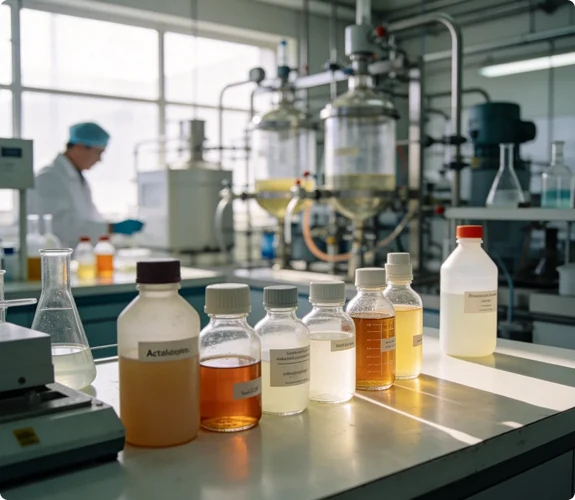
Acetaldehyde Production Process
The process uses ethanol oxidation over silver catalyst at high temperature to form acetaldehyde gas, followed by cooling, absorption, and distillation to obtain high-purity product.
Main Raw Materials for Pentaerythritol Production
Ethanol
Ethanol is the primary feedstock, undergoing oxidation and dehydrogenation over silver catalyst to form acetaldehyde, with purity directly affecting conversion and yield.
Air
Air supplies oxygen for the oxidation reaction, and its ratio with ethanol must be precisely controlled to maintain optimal reaction temperature and selectivity.
Silver Catalyst
Electrolytic silver catalyst provides high activity for ethanol oxidation at elevated temperature, ensuring stable performance, efficient conversion, and consistent product quality.
Integrated Reaction Mechanism and Process Engineering
The process integrates oxidation and dehydrogenation of ethanol over silver catalyst at 550–560℃, forming a thermally balanced system. Precise control of air-ethanol ratio ensures stable temperature, high selectivity, efficient heat use, and continuous operation.
Acetaldehyde Synthesis Process Package Core Advantage
The core advantage of the Acetaldehyde Synthesis Process Package lies in its optimized reaction conditions, ensuring high yield, low energy consumption, and consistent product quality, while being scalable for various industrial applications.
High Yield Efficiency
The Acetaldehyde Synthesis Process Package is designed to maximize yield while minimizing waste, optimizing reaction conditions to ensure high efficiency and cost-effectiveness in large-scale production.
Scalability
This process package offers flexibility for both small and large-scale operations, ensuring adaptability to varying production volumes while maintaining consistent product quality.
Energy Efficiency
The process package incorporates energy-efficient technologies, reducing overall energy consumption and operational costs while maintaining optimal reaction rates and output.
Sustainability
Focused on sustainability, the process minimizes environmental impact by optimizing raw material usage, reducing waste, and using eco-friendly technologies throughout acetaldehyde production.
Acetaldehyde Synthesis Process Package Function
The Acetaldehyde Synthesis Process Package functions to streamline the entire production cycle, ensuring efficient chemical reactions, high yields, consistent product quality, and scalability while reducing energy consumption and operational costs.
Integrated Reaction and Separation System
This process package integrates ethanol oxidation, gas cooling, multi-stage absorption, and distillation into a continuous system, enabling efficient acetaldehyde production with stable operation, high purity, and optimized energy utilization.
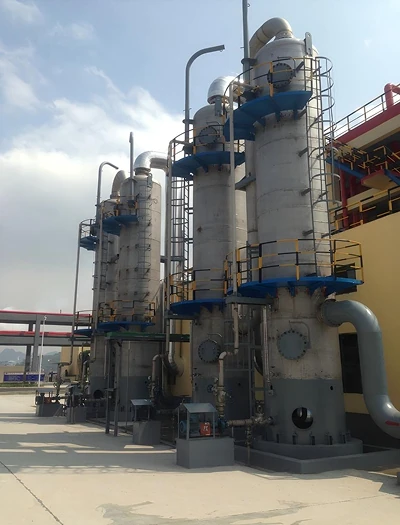
Acetaldehyde Synthesis Process Package Process Flow
The process flow includes ethanol evaporation, catalytic oxidation, gas cooling, multi-stage absorption, distillation, and recycling to produce high-purity acetaldehyde.
1
Ethanol Evaporation
Ethanol is vaporized and mixed with air, then heated to form a stable gas mixture with controlled composition for reaction.
2
Catalytic Oxidation
The mixture reacts over silver catalyst at high temperature, producing acetaldehyde through oxidation and dehydrogenation reactions.
3
Multi-Stage Absorption
Acetaldehyde is absorbed in multi-stage towers to form crude solution, improving recovery and reducing product loss.
4
Distillation Purification
Crude acetaldehyde is refined by distillation to obtain high-purity product and separate impurities.
5
Ethanol Recovery
Unreacted ethanol is recovered and recycled back to the process, improving raw material utilization.
Acetaldehyde Synthesis Process Package FAQ
Q1: What raw materials are used in acetaldehyde production?
Ethanol and air are used as main raw materials, with silver catalyst enabling oxidation and dehydrogenation reactions to produce acetaldehyde.
Q2: What is the typical purity of acetaldehyde product?
The product purity can reach up to 99.5% after distillation, meeting requirements for chemical and pharmaceutical applications.
Q3: How is unreacted ethanol handled in the process?
Unreacted ethanol is recovered through distillation and recycled back to the system, improving overall efficiency and reducing raw material consumption.
Q4: How are emissions controlled in this process?
Tail gases are treated by washing or incineration, while wastewater is processed biologically to ensure compliance with environmental standards.



Start Your Chemical Engineering Project
Start Your Chemical Engineering Project
*We respect your confidentiality and all information is protected.